
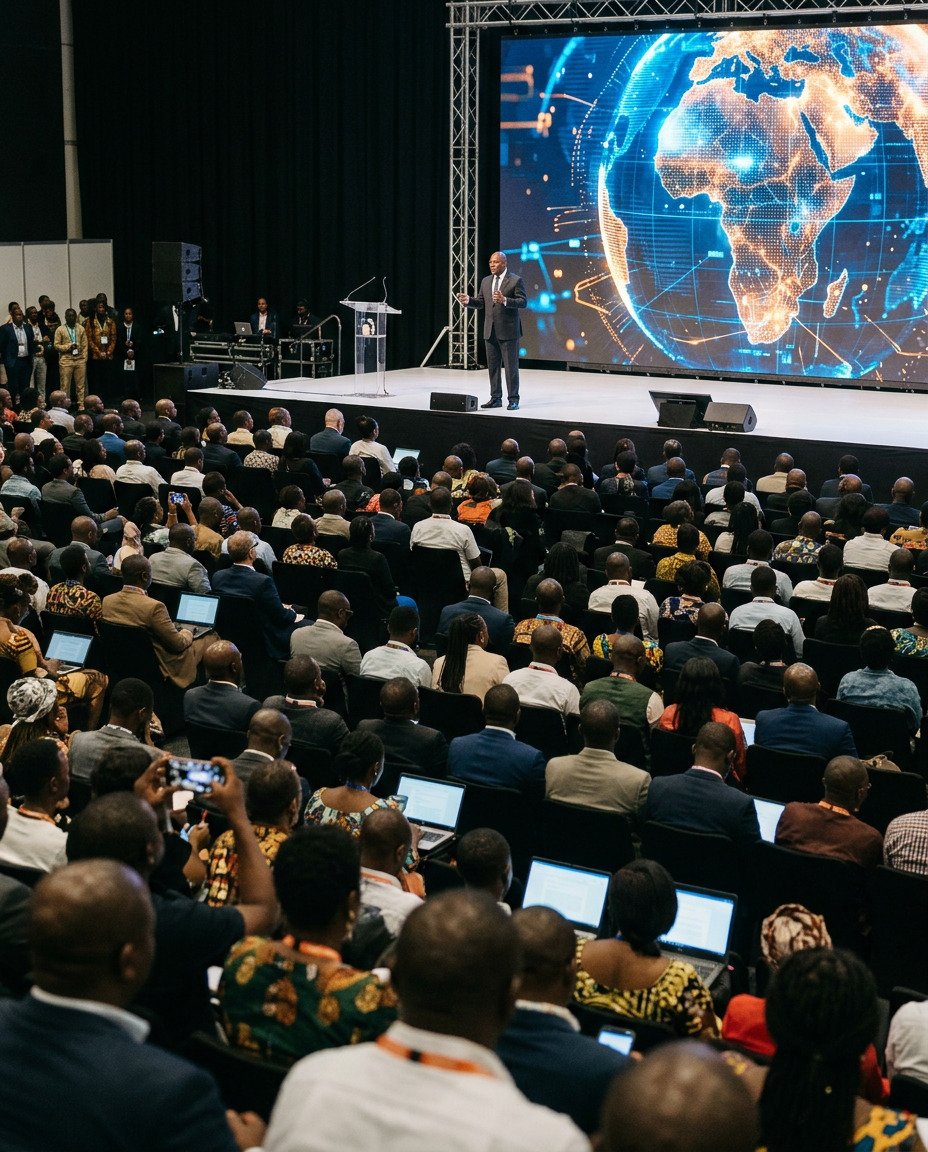
The 29th Africa Tech Festival, a pivotal gathering for the continent's technology sector, convened in Cape Town, South Africa, this week, drawing over 13,500 attendees and 2,000 companies from more than 130 countries. A central theme emerging from the event, which runs from November 17 to 19, 2026, is Africa's imperative to assert greater agency in its digital future. South African Deputy President Paul Mashatile, in his virtual opening address, issued a powerful call for African nations to transition from being mere consumers of technology developed elsewhere to becoming active innovators, builders, and exporters of digital solutions.
Deputy President Mashatile underscored that Africa cannot afford to remain on the periphery as artificial intelligence (AI) and advanced computing reshape the global economy. He articulated a vision where the continent actively participates in developing, applying, and governing these transformative technologies, ensuring they align with Africa's unique development goals and contribute to an inclusive and prosperous future. This strategic shift is crucial for Africa to secure a competitive position in the rapidly evolving global AI landscape.
To achieve this ambitious goal, Mashatile outlined five critical priorities for the continent. These include building future-ready digital infrastructure, investing significantly in digital skills and human capital, fostering and commercializing African innovation, establishing robust cybersecurity frameworks and responsible AI governance, and strengthening regional integration. These pillars form a comprehensive roadmap designed to empower Africa to harness the full potential of the digital era for its own benefit.
The foundation of Africa's digital transformation rests on robust and accessible digital infrastructure. Mashatile emphasized the urgent need to close the continent's connectivity gap, expand broadband access, and strengthen digital public infrastructure to ensure every community can participate in and benefit from the digital economy. This includes investments in data centers, fiber-optic networks, and cloud infrastructure, which are essential to support the growing demands of AI and other advanced technologies.
Beyond physical infrastructure, the development of human capital is paramount. The Deputy President highlighted that Africa's most valuable resource in the digital era is its human talent, not just its natural resources. Empowering young people with essential skills in digital technologies, AI, cybersecurity, and data science is crucial for building a workforce capable of driving innovation and implementing advanced solutions across various sectors.
Fostering and commercializing African innovation is another cornerstone of the proposed strategy. Mashatile urged the continent to cultivate its own talent and create solutions tailored to its unique challenges, which the world will ultimately seek to use. This involves nurturing local innovation ecosystems, supporting startups, and creating an environment where research can be translated into viable commercial products and services that address local needs, from agriculture to healthcare.
As digital transformation accelerates, ensuring digital trust and accountability through strong cybersecurity and responsible AI governance becomes increasingly vital. The festival also saw discussions on how AI can both enhance threat detection and enable more sophisticated cyberattacks, underscoring the dual nature of the technology. Establishing clear ethical guidelines and regulatory frameworks for AI development and deployment is essential to mitigate risks and build public confidence.
Regional integration and cooperation were also stressed as key enablers for Africa's digital ambitions. Harmonizing digital regulations, facilitating data flows, and enhancing cross-border connectivity through initiatives like the African Continental Free Trade Area (AfCFTA) can create a unified digital market. This collaborative approach can unlock significant economic value, with cloud adoption alone potentially generating over R185 billion by 2030.
The broader discussions at the Africa Tech Festival echoed these sentiments, with industry leaders offering practical insights. Sabine Dall'Omo, CEO of Siemens for Sub-Saharan Africa, highlighted AI's potential to optimize public infrastructure, such as water and electricity systems, through predictive maintenance and improved resource management. Such applications can enhance the financial stability of state-owned entities and municipalities, addressing critical challenges across the continent.
Furthermore, the festival served as a platform for recognizing and supporting African innovation. Qualcomm, for instance, awarded a $75,000 grant to Qualikeeper Investments Ltd., an agritech startup developing an edge-AIoT livestock intelligence platform designed for low-connectivity environments. This initiative exemplifies the kind of targeted support needed to translate innovative ideas into tangible solutions that benefit African communities.
For African readers, these discussions signal a pivotal moment for the continent's engagement with technology. The emphasis on local development, skills, and infrastructure means potential for job creation, economic diversification, and the development of solutions uniquely suited to African contexts. It is a call to action for governments, businesses, educators, and individuals to actively participate in shaping a digital future that is inclusive, equitable, and prosperous for all Africans.
The path forward involves significant investment, policy reforms, and sustained collaboration across sectors and borders. While challenges such as inadequate broadband access, high connectivity costs, and digital skills deficits persist, the collective vision articulated at the Africa Tech Festival provides a clear direction. Africa is positioning itself not just to adapt to the global digital revolution, but to lead in areas that address its specific needs and contribute to global technological advancement.






0 Comments
No comments yet. Be the first to comment!