
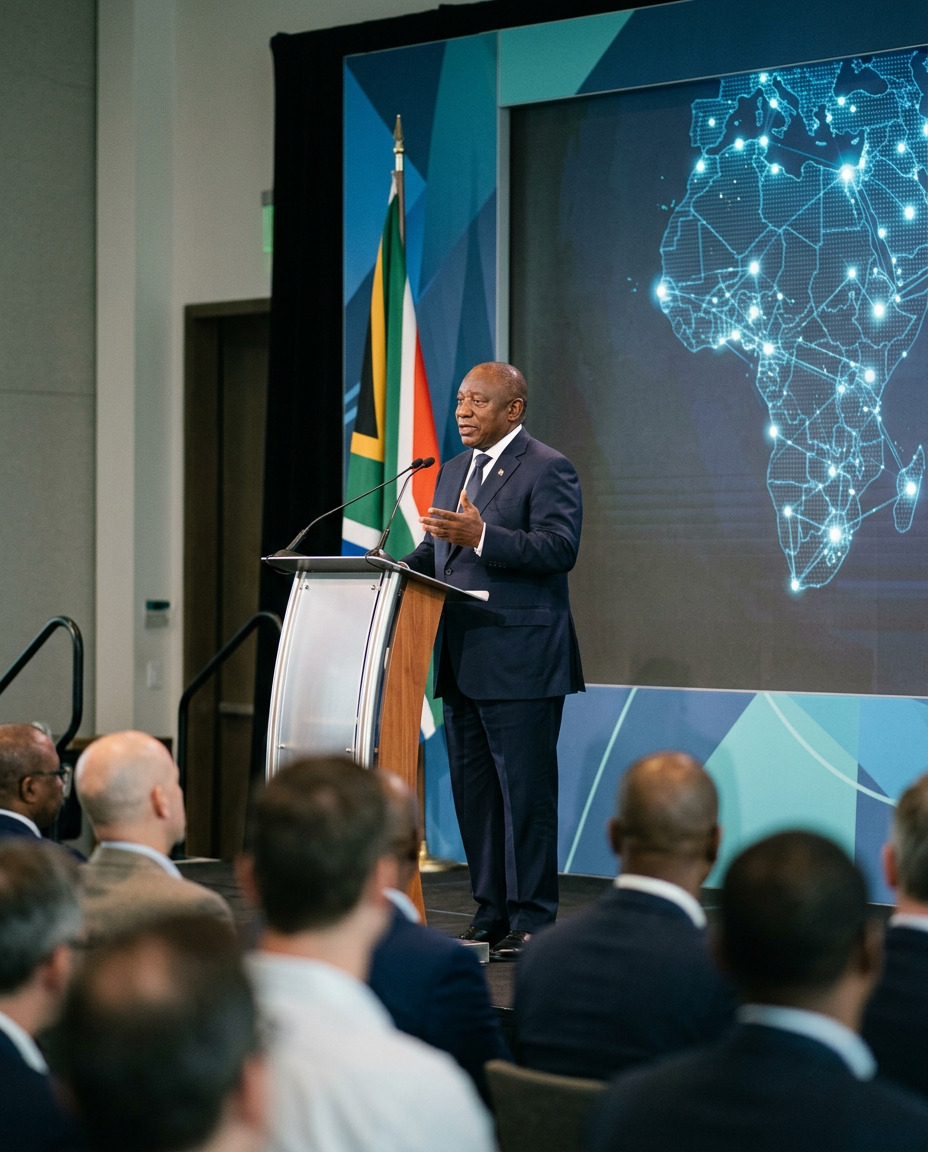
African leaders are making a concerted push to transform the continent's role in the global artificial intelligence (AI) landscape, advocating for significant investment in local digital infrastructure and the development of homegrown AI capabilities. This strategic pivot aims to shift Africa from being primarily a consumer of foreign-developed technologies to a key producer and innovator in the rapidly evolving AI economy. Recent high-level engagements underscore this ambition, signaling a continental drive towards technological sovereignty and economic empowerment through AI.
A central theme emerging from these discussions is the critical need for robust digital infrastructure, particularly data centers and high-performance computing facilities, across the continent. South African President Cyril Ramaphosa, during a recent visit to Silicon Valley, emphasized that South Africa aims to become the preferred destination for AI infrastructure investment in Africa. He highlighted the country's existing data center capacity, which accounts for approximately 70% of the continent's total, as a foundation for further growth.
President Ramaphosa articulated a vision where South Africa not only attracts foreign investment but also develops a comprehensive AI ecosystem, encompassing research, software development, engineering, and data services. He urged global technology companies to establish substantial research and development operations within the country, fostering partnerships with local universities and science councils. This approach seeks to ensure that the benefits of AI development are localized, creating jobs and building local expertise.
Echoing this sentiment, South African Deputy President Paul Mashatile, speaking virtually at the 29th Africa Tech Festival in Cape Town, stressed that Africa cannot afford to remain on the margins of the AI revolution. He called for collaborative efforts between governments, development finance institutions, and the private sector to bridge the continent's connectivity gap, expand broadband access, and strengthen digital public infrastructure. Mashatile underscored that Africa must be an innovator and exporter of future technologies, not merely a recipient.
The discussions at the Africa Tech Festival further highlighted the urgent need for an infrastructure backbone to secure sufficient compute power for AI. Experts noted that despite Africa accounting for 20% of the world's population, it hosts less than 1% of global data center and distribution facilities. This significant disparity necessitates rapid acceleration in infrastructure development to support the continent's AI ambitions and achieve technological self-reliance.
For African readers, this strategic shift carries profound implications. The emphasis on local production and ownership of AI technologies means potential job creation in high-skilled sectors, fostering innovation ecosystems, and developing solutions tailored to unique African challenges. Rather than importing generic AI applications, the continent aims to build AI that reflects its diverse realities, languages, and development priorities, ensuring technology adapts to Africa, not just the other way around.
The push for AI infrastructure investment also presents economic opportunities beyond the tech sector. Large data centers represent billions in capital investment, generating demand for construction, electrical engineering, cooling systems, and specialized maintenance services. This can stimulate local manufacturing and supply chains, creating wider industrial ecosystems and providing critical computing infrastructure for the entire continent.
However, leaders caution that building data centers alone is insufficient. The strategy must extend to developing human talent, with a focus on digital technologies, AI, cybersecurity, data science, and entrepreneurship. Empowering young people with these skills is seen as Africa's most valuable resource in the digital era, crucial for building a resilient, inclusive, and globally competitive digital future.
The continent's approach also recognizes that AI is more than just language models and algorithms; it rests on a foundational layer of minerals, infrastructure, data, and deployment. By focusing on the full AI value chain, from raw materials to advanced applications, Africa aims to avoid repeating historical patterns where raw materials leave the continent only for finished, high-value products to return. This integrated strategy is vital for securing a meaningful place in the global AI economy.
Ultimately, the intensified push by African leaders signifies a clear commitment to shaping the continent's digital destiny. By championing local AI infrastructure, fostering innovation, and demanding a role as producers rather than just consumers, Africa is positioning itself to harness the transformative power of AI for sustainable economic growth and to ensure its digital future is built on a foundation of sovereignty and self-determination.






0 Comments
No comments yet. Be the first to comment!