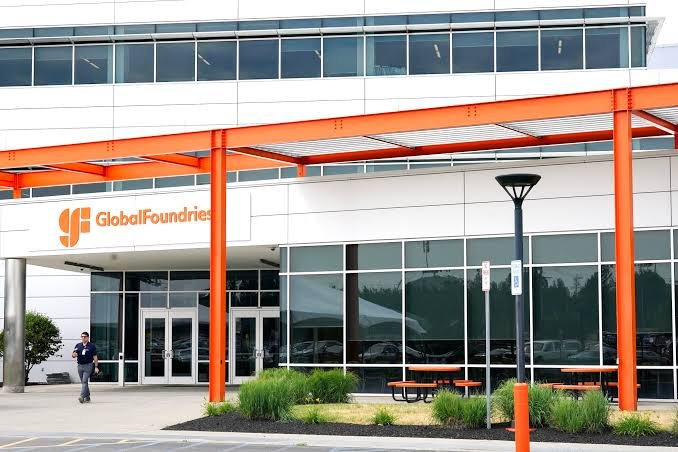
The United States is preparing to award semiconductor manufacturer GlobalFoundries up to $300 million to support the development of faster connections between advanced computer chips, strengthening the infrastructure needed to power the next generation of artificial intelligence systems. The funding reflects a growing recognition that the future of AI will not be determined only by the performance of individual processors but also by how quickly chips can communicate, share information, and work together inside increasingly powerful computing systems.
The planned investment comes as governments and technology companies race to expand semiconductor capacity and reduce weaknesses in global chip supply chains. While companies such as Nvidia have become widely known for producing powerful AI processors, the broader AI ecosystem depends on many other technologies, including memory chips, networking equipment, advanced packaging, and high-speed connections that allow large numbers of processors to operate as a single computing system.
What Happened?
GlobalFoundries said the U.S. government will provide up to $300 million to support the development of advanced technologies designed to improve how chips connect and exchange data. The project is expected to focus on improving chip-to-chip communication, an increasingly important area as AI systems require enormous amounts of computing power and depend on multiple processors working together.
The funding is part of a wider effort by the United States to strengthen domestic semiconductor capabilities and support technologies considered important to economic competitiveness and national security. Rather than focusing only on manufacturing more chips, the investment highlights the growing importance of the systems that connect those chips and allow them to operate efficiently.
Why Faster Chip Connections Matter
Modern AI systems process enormous amounts of information. Training advanced models can require thousands of specialised processors operating together across large data centres. For these systems to work efficiently, the processors must exchange information quickly and reliably.
A powerful chip can lose much of its potential if data moves too slowly between it and other components. This makes high-speed connections a major part of AI performance. Improving these connections could help reduce delays, increase computing efficiency, and allow larger AI systems to operate more effectively.
As AI models become more complex, the ability to connect processors efficiently may become just as important as improving the processors themselves.
Why the U.S. Is Investing in Semiconductor Technology
Semiconductors are now considered strategic technologies because they support everything from smartphones and vehicles to cloud computing, artificial intelligence, communications networks, and advanced industrial systems.
The United States has increased efforts to strengthen its semiconductor industry following years of supply-chain disruptions and growing international competition. Government funding is being directed toward chip manufacturing, research, advanced packaging, and other technologies that could support future computing systems.
The GlobalFoundries investment demonstrates that the competition is expanding beyond the production of individual processors. Governments are increasingly investing in the wider ecosystem required to make advanced computing possible.
What This Means for the AI Industry
The announcement could support the development of more efficient AI infrastructure over the coming years. Faster chip connections may help data centres process larger workloads while improving the performance of cloud platforms and advanced computing systems.
The investment may also strengthen GlobalFoundries' position in the semiconductor industry. Although the company is not known primarily for producing the high-end AI processors associated with Nvidia, its manufacturing capabilities and technology could become increasingly valuable as demand grows for specialised components and advanced chip connections.
For the wider technology industry, the development is another sign that AI investment is moving deeper into the physical infrastructure behind digital products.
The Growing Battle Beyond AI Chatbots
Public attention often focuses on AI assistants, image generators, and other consumer-facing products. However, much of the industry's most important competition is happening inside data centres and semiconductor laboratories.
Technology companies are investing heavily in processors, memory, networking systems, cooling technology, electricity infrastructure, and advanced chip packaging. These less visible technologies could determine how quickly AI systems improve and how affordable they become.
The companies building the foundations of AI may therefore play an increasingly important role in shaping the future of the industry.
What's Next?
GlobalFoundries is expected to continue developing the technology supported by the proposed funding as the U.S. expands its broader semiconductor strategy. Industry analysts will watch for additional details about the project, including the technologies being developed and how they could be used in future AI systems.
The announcement may also encourage further investment in advanced chip connections as technology companies seek new ways to increase computing performance without relying entirely on larger or more powerful processors.
Overite Insight
The AI race is becoming more complex. The next major breakthrough may not come from a new chatbot or a single powerful processor but from the infrastructure that allows thousands of chips to operate together more efficiently.
As AI systems grow, speed will increasingly depend on how well the hardware communicates. That means the companies building the connections between chips could become just as important as the companies designing the chips themselves.
Read More
- Reuters — U.S. to award GlobalFoundries $300 million to develop faster AI chip links
- GlobalFoundries Official Website