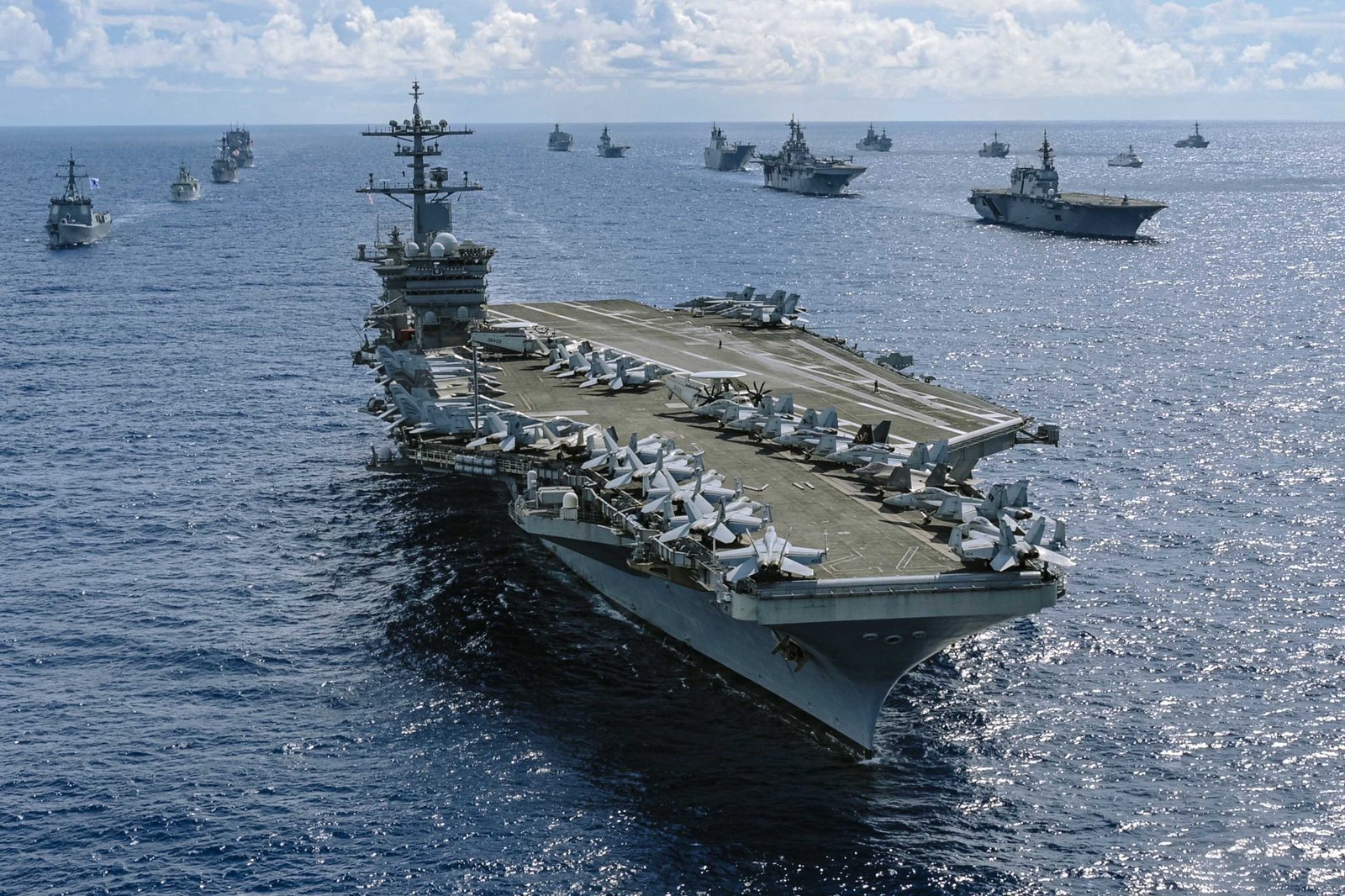
The confrontation between the United States and Iran has taken another significant turn after the US Central Command (CENTCOM) announced that American forces have redirected 48 commercial vessels as part of ongoing enforcement of a US naval blockade against Iran.
According to CENTCOM, the figure was recorded as of August 5, 2026. The command also reported that two commercial vessels had been disabled and two others boarded during the maritime enforcement operations.
US Intensifies Maritime Enforcement
The latest development highlights the growing pressure on commercial shipping operating around Iranian waters and the wider Gulf region.
CENTCOM said the operations form part of continued enforcement of the blockade. The US military has also maintained patrols in the region, with American aircraft conducting surveillance and other operations over regional waters.
The redirection of 48 commercial vessels represents a major development for international shipping, particularly because the Gulf region contains some of the world's most important energy transportation routes.
Strait of Hormuz Remains a Critical Flashpoint
The situation is closely linked to the Strait of Hormuz, a strategically important waterway through which a significant portion of global oil and energy shipments passes.
While the US has continued its maritime operations, reports indicate that a southern route through the Strait of Hormuz remains available to commercial vessels. More than 1,000 vessels have reportedly been assisted through the waterway during the broader crisis.
Iran, meanwhile, has been pursuing discussions with Oman over a possible navigation corridor through the Strait of Hormuz. Iranian officials have indicated that progress depends heavily on the broader military and political situation.
What Does This Mean for Global Oil Markets?
The latest escalation could have major consequences for the global energy market.
Any prolonged disruption to commercial shipping around the Strait of Hormuz could increase transportation costs, create uncertainty for oil and gas supplies and put upward pressure on international energy prices.
For oil-importing countries, particularly developing economies that depend heavily on imported refined petroleum products, prolonged instability could translate into higher fuel and logistics costs.
Nigeria and other African economies could also feel the indirect effects through international crude prices, shipping costs, foreign exchange pressures and the price of refined petroleum products.
Growing Risk to Commercial Shipping
The involvement of commercial vessels makes the latest development particularly significant.
Redirecting, boarding or disabling merchant vessels can create uncertainty for shipping companies and insurers. Operators may be forced to reconsider routes, increase security measures or delay voyages until conditions become clearer.
A prolonged confrontation could therefore affect not only governments and military forces but also global businesses, consumers and energy markets.
Iran-Oman Talks Offer Possible Diplomatic Opening
Despite the military escalation, diplomatic efforts have continued.
Iran and Oman have reportedly been working toward arrangements concerning navigation through the Strait of Hormuz. The talks could provide an avenue for reducing tensions if an acceptable framework for commercial shipping can be reached.
However, the continuing US blockade enforcement and Iran's opposition to the blockade mean that the situation remains highly fluid.
What Happens Next?
The major questions now are whether the US will expand maritime enforcement, whether Iran will respond with additional measures and whether diplomatic negotiations can prevent further disruption to international shipping.
With 48 commercial vessels already redirected, two disabled and two boarded, the latest CENTCOM announcement demonstrates that the confrontation has moved beyond political statements and into increasingly direct maritime enforcement.
The situation remains fast-moving, and developments around Iran, the Strait of Hormuz and international shipping will be closely watched by governments, energy companies, traders and investors around the world.