Content:
Introduction
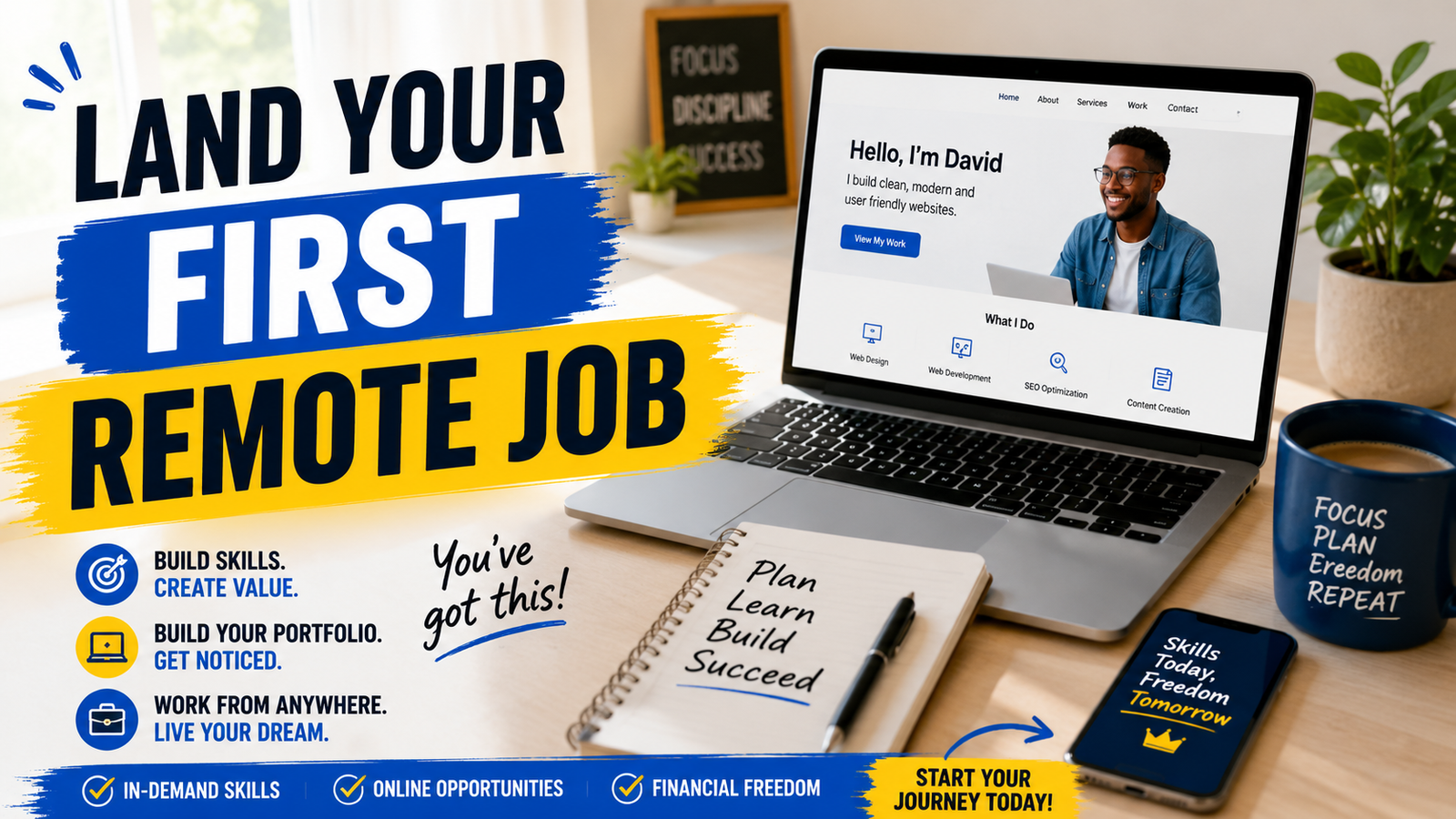
"No experience" is the biggest excuse stopping people from landing their first remote job — but you don't need years of work history to get hired. You need proof you can do the work. This guide shows you how to build a simple portfolio from scratch, even if you've never had a paying client, so you can start applying for remote gigs with confidence.
What You'll Need
A free portfolio platform (Notion, Carrd, or Google Sites all work)
2–3 sample projects (real or self-created)
A short bio describing your skill
A free Gmail account for professional communication
Step-by-Step Instructions
Pick one skill to focus on. Choose something in demand — writing, graphic design, video editing, virtual assistance, or social media management. Don't spread yourself across five skills at once.
Create sample work, even without clients. No portfolio pieces yet? Create your own: write a sample article, design a mock Instagram post, edit a short video from free stock footage. Employers care about quality, not whether it was "real" work.
Set up your portfolio page. Use a free tool like Carrd or Notion to build a simple one-page site: your name, your skill, 2–3 sample projects, and a short bio explaining what you offer.
Write a clear, short bio. Focus on what you can do for a client, not just your background. Example: "I help small businesses create simple, scroll-stopping social media graphics."
Get your first testimonial. Offer a free or heavily discounted project to a local business or friend in exchange for a written testimonial you can add to your portfolio.
Start applying. Use your new portfolio link when applying on platforms like Upwork, Fiverr, or even directly messaging small businesses on Instagram and LinkedIn.
Pro Tips
Keep your portfolio to one page — clients skim, they don't read essays.
Update it every time you complete a new project, even small ones.
A portfolio link looks far more professional than a plain CV when applying for digital/remote roles.
Conclusion
You don't need permission or years of experience to start freelancing — you need proof of skill and the confidence to show it. This guide gives anyone a clear starting point, which is why career-focused content like this tends to get saved, shared, and revisited by people actively job hunting.



Robot 1 month ago
Nice work really looking forward on trying this thank you Dave
Dave 1 month ago
😌