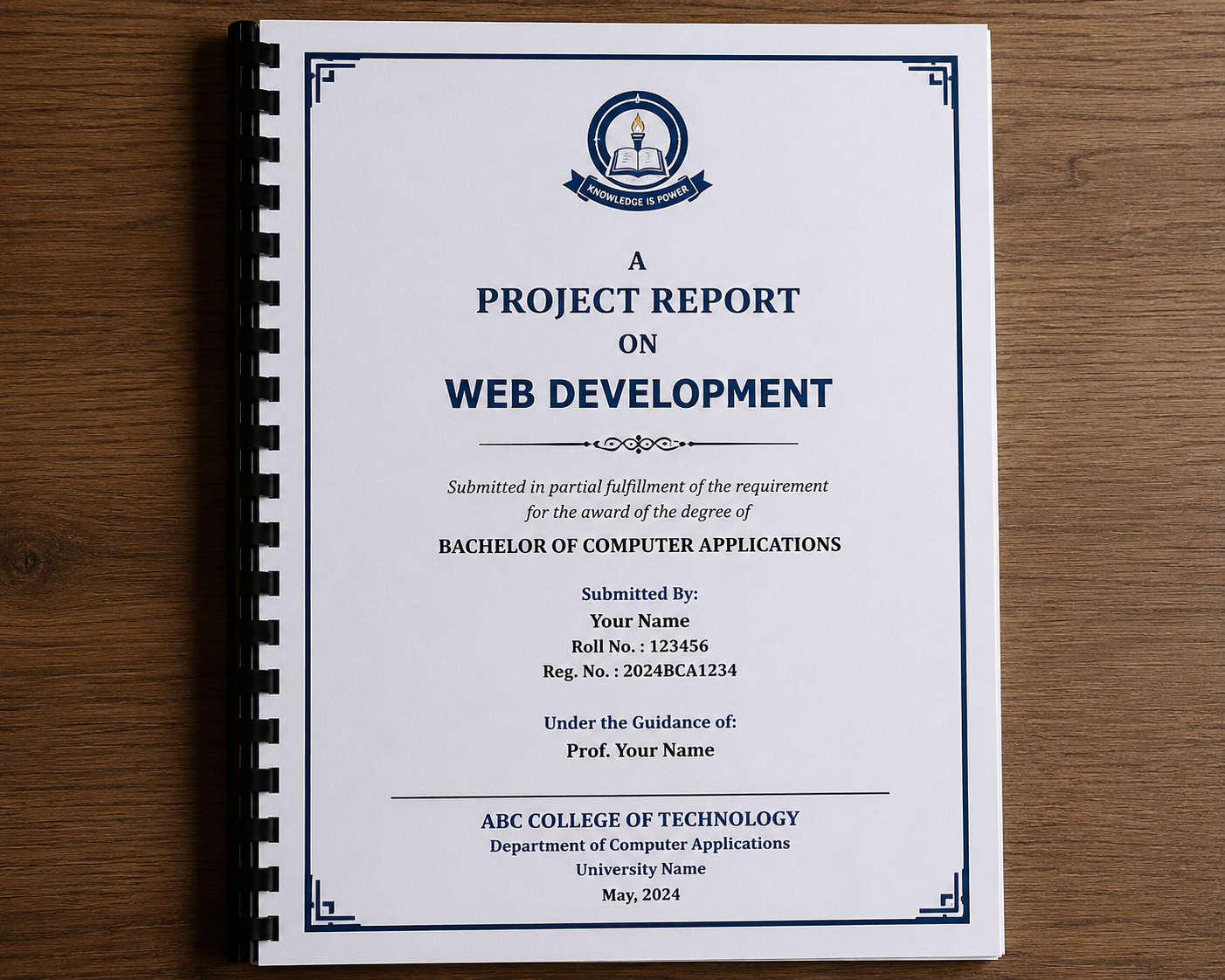
Project writing is one of the most important academic requirements in higher institutions. Whether you are a university, polytechnic, or college of education student, your final-year project demonstrates your ability to conduct research, analyze data, and present findings professionally.
Many students struggle with project writing because they don't know where to start. This guide explains the entire process from topic selection to project defense.
What Is Project Writing?
Project writing is a structured research process where students investigate a specific problem, collect and analyze data, and provide conclusions and recommendations. It is usually submitted during the final year of study and contributes significantly to graduation requirements.
Step 1: Choose a Researchable Topic
Selecting the right topic is the foundation of a successful project.
A good project topic should:
- Be relevant to your field of study.
- Address a real-life problem.
- Be specific and clear.
- Have enough available research materials.
- Be approved by your project supervisor.
Example:
- The Impact of Social Media Marketing on Small Businesses.
- Effects of Poor Record Keeping on Small Business Growth.
- Influence of Artificial Intelligence on Higher Education.
Step 2: Write a Strong Project Proposal
Your proposal introduces your research idea and usually contains:
- Title
2 Background of the Study
3 Statement of the Problem
4 Aim and Objectives
5 Research Questions
6 Research Hypotheses (if applicable)
7 Significance of the Study
8 Scope of the Study
A well-written proposal increases the chances of supervisor approval.
Step 3: Conduct a Literature Review
Review books, journals, articles, conference papers, and credible online sources related to your topic.
The literature review should:
- Explain previous studies.
- Identify knowledge gaps.
- Compare different authors' opinions.
- Justify why your research is necessary.
- Always cite your sources correctly to avoid plagiarism.
Chapter One typically includes:
- Introduction
- Provide background information about the topic.
- Statement of the Problem
- Clearly explain the issue your research intends to solve.
- Objectives of the Study
- State both the general and specific objectives.
- Research Questions
- Develop questions your study will answer.
- Research Hypotheses
- Include testable hypotheses where required.
- Significance of the Study
- Explain who will benefit from the research.
- Scope and Limitations
- Define what your research covers and its limitations.
- Definition of Terms
Explain important terms used in the study.
Step 5: Write Chapter Two (Literature Review)
This chapter includes:
- Conceptual Review
- Theoretical Framework
- Empirical Review
- Summary of Literature
The aim is to demonstrate your understanding of previous research.
Step 6: Write Chapter Three (Research Methodology)
Describe how the research was conducted.
Include:
- Research Design
- Population of the Study
- Sample Size
- Sampling Technique
- Data Collection Methods
- Research Instrument
- Validity and Reliability
- Method of Data Analysis
This chapter explains the credibility of your research process.
Step 7: Collect Data
Depending on your discipline, data may be collected through:
- Questionnaires
- Interviews
- Observation
- Experiments
- Existing databases
- Online surveys
Ensure your data is accurate and ethical.
Step 8: Analyze Your Data
Use appropriate analytical tools such as:
- Percentages
- Mean scores
- Tables
- Charts
- Graphs
- Statistical software (SPSS, Excel, R, Python, etc.)
Interpret the results clearly.
Step 9: Write Chapter Four
Present:
- Data analysis
- Findings
- Interpretation of results
- Discussion of findings
Use tables and charts where necessary.
Step 10: Write Chapter Five
This chapter contains:
- Summary
- Conclusion
- Recommendations
- Suggestions for Further Studies
Your recommendations should be practical and based on your findings.
Step 11: Prepare References
Use the referencing style required by your institution.
Common styles include:
- APA
- MLA
- Chicago
- Harvard
- IEEE
Never copy another person's work without proper citation.
Step 12: Proofread Your Work
Before submission:
- Correct grammar.
- Check spelling.
- Verify formatting.
- Ensure consistent referencing.
- Remove plagiarism.
- Confirm page numbering.
Professional proofreading improves the quality of your project.
Step 13: Prepare for Project Defense
During your defense:
- Understand every chapter.
- Practice answering likely questions.
- Dress professionally.
- Speak confidently.
- Be respectful to the panel.
- Support your findings with evidence.
Common Project Writing Mistakes
Avoid these errors:
- Choosing overly broad topics.
- Plagiarism.
- Weak literature review.
- Poor grammar.
- Inconsistent formatting.
- Incorrect referencing.
- Submitting without proofreading.
- Ignoring your supervisor's corrections.
Tips for Scoring High in Your Project
- Start early.
- Meet your supervisor regularly.
- Read extensively.
- Use credible academic sources.
- Keep backups of your work.
- Revise consistently.
- Maintain originality.
- Frequently Asked Questions (FAQs)
How many chapters does a project have?
Most institutions require five chapters, although some departments may have different formats.
What is the ideal project length?
It varies by institution and department, but most projects range between 50 and 120 pages.
Conclusion
Project writing may seem difficult at first, but by following the correct process and maintaining consistency, every student can produce a quality research project. Start early, seek guidance from your supervisor, and focus on originality and accuracy. A well-written project not only earns good grades but also develops valuable research, analytical, and problem-solving skills that will benefit you throughout your career.