
Africa's ambitious drive towards a robust digital economy and leadership in artificial intelligence is encountering substantial headwinds, primarily stemming from persistent challenges within its telecommunications infrastructure. While significant strides have been made in extending network coverage across the continent, a critical 'usage gap' continues to hinder widespread mobile internet adoption, alongside inherent vulnerabilities in the existing broadband networks. These issues collectively pose a formidable barrier to realizing Africa's full digital potential.
Recent reports highlight a stark disparity between network availability and actual mobile internet usage. For instance, mobile broadband population coverage in Africa reached an impressive 92 percent by 2025, with 4G coverage expanding to 83 percent and 5G networks covering 15 percent of the population. However, only 28 percent of Africa's population actively used mobile internet on their own devices, a figure significantly lower than the 66 percent observed globally. This means approximately 64 percent of Africans living within mobile broadband coverage still do not utilize mobile internet, underscoring a profound disconnect.
The 'usage gap' is particularly pronounced in regions like Eastern Africa, which recorded the highest disparity at 72 percent, while Central Africa grappled with the largest coverage gap at 24 percent. This phenomenon is not new; similar patterns have been observed with mobile broadband coverage reaching 92 percent against a usage of 36 percent, and international bandwidth expanding rapidly while a third of terrestrial fibre remains unlit. The challenge for African operators, therefore, lies not just in building capacity but in converting that capacity into tangible usage and revenue.
Compounding the adoption challenge is the economic pressure on mobile operators. Despite increasing mobile data consumption, average revenue per user (ARPU) declined by approximately 49 percent in real terms between 2015 and 2025. Revenue per gigabyte of mobile data also plummeted by about 92 percent during the same period, driven by lower data prices and efforts to improve affordability. Operators are under growing pressure to expand 4G and 5G networks, improve speeds, and increase digital adoption, all while grappling with high spectrum costs and rising capital expenditure requirements.
Beyond the usage gap, the physical vulnerability of Africa's broadband infrastructure presents another critical impediment. Industry leaders have warned that a single fibre cut can still disconnect entire countries from the internet, jeopardizing the continent's AI ambitions. Huawei's Vice President Yongqiang Yuan noted that Africa experiences over 100,000 fibre cuts annually, emphasizing that every dollar invested in network resilience saves five dollars in losses. This reliance on limited and often indirect fibre routes leaves many African nations exposed to significant outages.
The lack of a comprehensive, continent-wide terrestrial fibre backbone means that internet traffic often relies on international routes, even for intra-African communication. Experts advocate for a system where data centers in one African country can connect directly to those in another, eliminating the need for indirect global routing. Such an interconnected infrastructure is deemed essential for fostering digital sovereignty and ensuring the resilience required for advanced technologies like AI.
Regulatory reforms are seen as a crucial lever to address these challenges. According to an October 2026 GSMA Intelligence report, strategic regulatory changes could extend 5G coverage to an additional 170 million people and 4G coverage to another 50 million people by 2035. These reforms could also significantly boost average mobile download speeds by 30–50 percent and generate over $120 billion in additional cumulative GDP between 2026 and 2035. However, African operators currently have access to less mobile spectrum compared to global averages, and they pay more per unit of spectrum.
The implications for African readers are profound. The persistent usage gap means that a large segment of the population remains excluded from the full benefits of the digital economy, impacting education, healthcare, and economic opportunities. Furthermore, unreliable and vulnerable internet infrastructure directly threatens the continent's ability to leverage emerging technologies like artificial intelligence for development, as AI applications demand stable, high-speed connectivity. Addressing these foundational issues is paramount for Africa to truly harness the power of its digital transformation.
For businesses and innovators, the current landscape presents both obstacles and opportunities. While the high cost of data and unreliable connectivity can stifle growth, the immense untapped market represented by the usage gap signifies a vast potential for innovative solutions focused on affordability and accessibility. Operators and governments must collaborate to implement policies that reduce spectrum costs, incentivize infrastructure sharing, and promote digital literacy to bridge the divide between network availability and actual internet use.
Ultimately, Africa's digital future hinges on a concerted effort to not only expand network reach but also to ensure that connectivity is affordable, reliable, and actively utilized by its citizens. Without robust and resilient broadband infrastructure, coupled with policies that encourage widespread adoption, the continent risks falling short of its ambitious goals for digital inclusion and AI-driven economic growth. The conversation must shift from mere coverage statistics to meaningful engagement and secure digital ecosystems.
Image credit
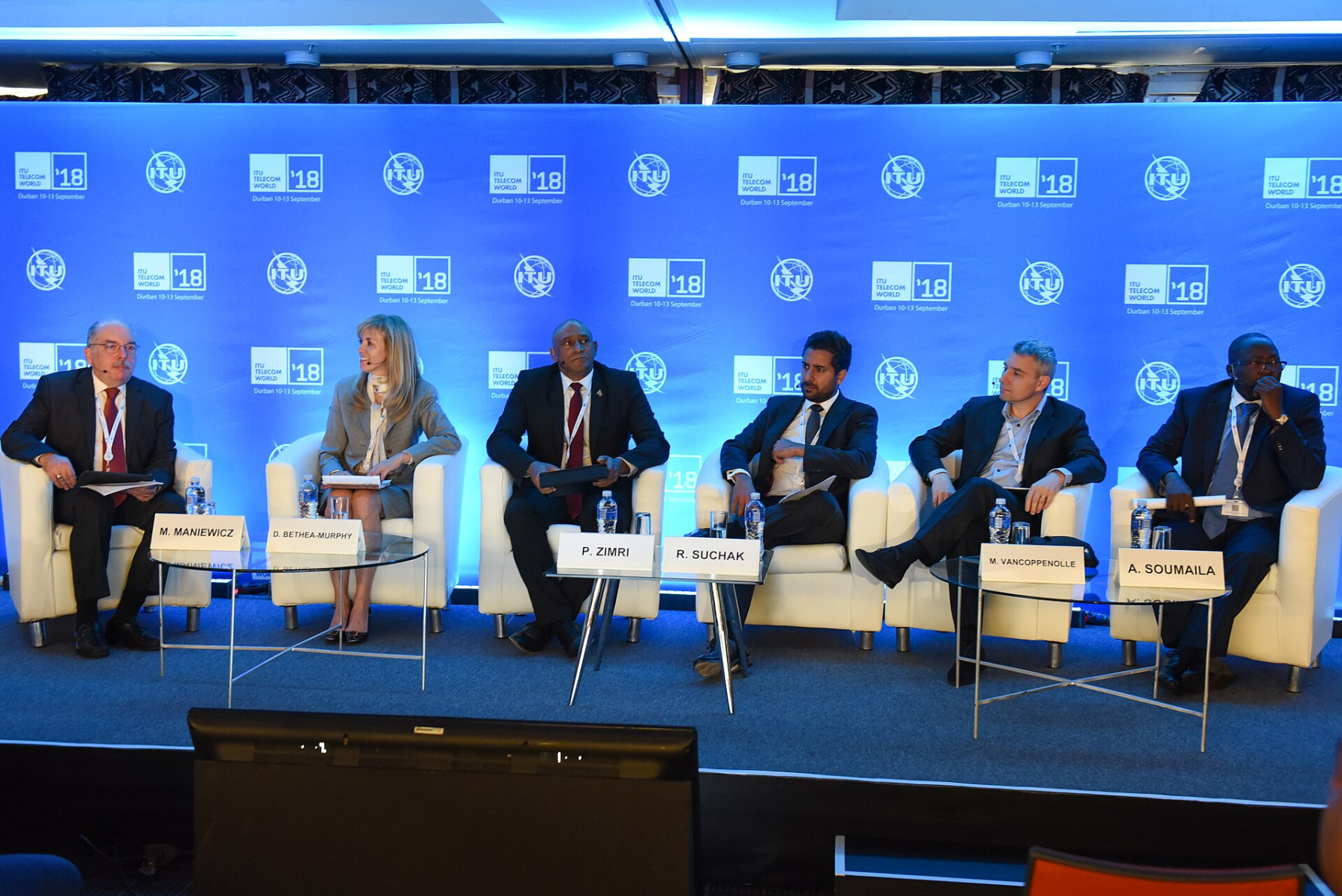
Image credit: Illustrative photo: ITU Pictures from Geneva, Switzerland via Wikimedia Commons · CC BY 2.0 · photo source · license



0 Comments
No comments yet. Be the first to comment!